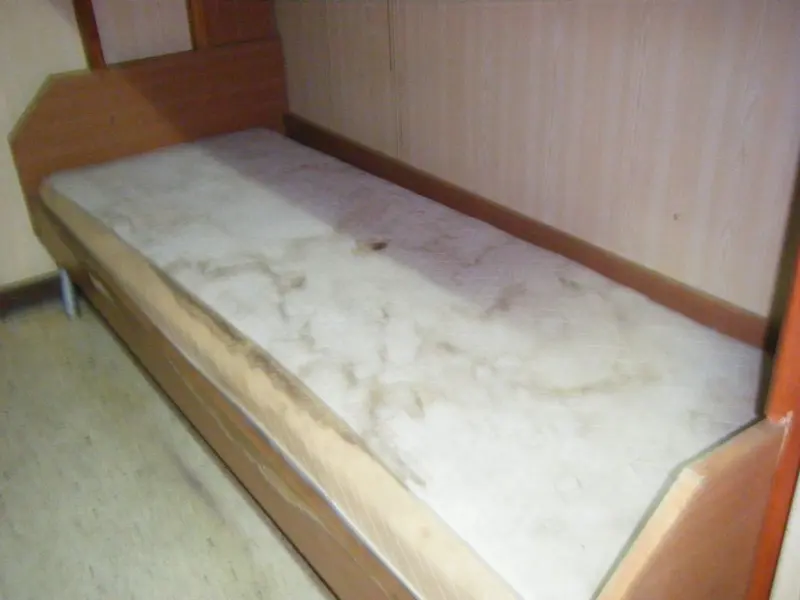
A mattress is the one part of the bed you can’t throw in the wash. Most stains can be kept small if you act quickly and use as little water as possible: a soaked mattress takes a long time to dry, and moisture deep inside is a bigger problem than the mark on top.
First, the basics
- Strip the bed and stand the mattress on its side if you can. Bed Advice UK suggests this because fluid is then less likely to soak down into the filling.
- Act fast. Deal with a spill while it’s fresh.
- Go easy on the water. Bed Advice UK’s advice is to sponge with cold water, “but don’t overwater”.
- Air it afterwards. Open the windows and leave the mattress uncovered until it is completely dry before you make the bed again. Bed Advice UK suggests airing a mattress in the sun for a few hours where you can.
Stain by stain
Bed Advice UK gives these methods. It’s sensible to try any cleaner on a hidden corner first.
| Stain | What Bed Advice UK suggests |
|---|---|
| Urine | Sponge with a warm solution of mild detergent or upholstery shampoo, then wipe over with cold water with a few drops of antiseptic added. |
| Vomit or diarrhoea | Scrape up as much as you can without spreading it, then treat as for urine. |
| Blood | A stain remover or upholstery cleaner, followed by cold water. |
| Red wine | Blot with a damp cloth and sprinkle with salt. Then blot with a cloth dampened in one part white vinegar to two parts washing-up liquid, sprinkle with bicarbonate of soda and leave for at least an hour. |
| Fruit juice | A stain treatment used as its instructions say, then clear water. Strongly coloured drinks such as blackcurrant will probably leave a mark. |
| Chocolate and milky drinks | Treat as for fruit juice. Once dry, a grease-solvent spray — used very sparingly on foam — then brush off what is left. |
| Oily or greasy marks | A grease-solvent spray to draw the stain out. Bed Advice UK says not to use a liquid grease solvent. |
Illness in the house
If the mess comes from a stomach bug, the cleaning above is only part of it. The NHS’s advice on norovirus is to wash contaminated clothing and bedding separately from other laundry on a 60°C wash, and to clean surfaces such as toilet seats, flush handles, taps and door handles.
Children and bedwetting
The NHS bedwetting page suggests using waterproof covers on a child’s mattress and duvet. It also says many children under five wet the bed and that this is normal. It suggests seeing a GP if you have tried the things you can do at home and your child keeps wetting the bed, or if a child starts wetting the bed again after being dry for more than six months.
For a cot or child’s mattress, our children’s beds and cot mattress safety checklist has more on choosing one.
Prevention: a protector and a routine
Bed Advice UK’s advice is to clean stains as soon as they appear and always use a mattress protector — far easier to wash than a mattress. It also suggests:
- vacuuming the whole mattress about once a month with the upholstery tool, paying attention to the seams, corners and edges;
- airing the mattress regularly — strip the bed while you’re away so it gets a proper airing;
- washing sheets and pillowcases weekly.
Our article on dust mites and washing your bedding covers wash temperatures and allergy covers.
When cleaning isn’t enough
- A damp or musty smell that won’t clear may mean moisture is getting in from the room — see damp and condensation in the bedroom.
- Dark spots or bites may be something else entirely — see bed bugs: the signs.
- A mattress that is stained, sagging and past its best may simply be due for replacing: how long a mattress lasts and getting rid of an old mattress explain the options.
- A guarantee usually covers faults in how a mattress was made, not stains. If something is wrong with a newish mattress, see returning a mattress: faults and guarantees.