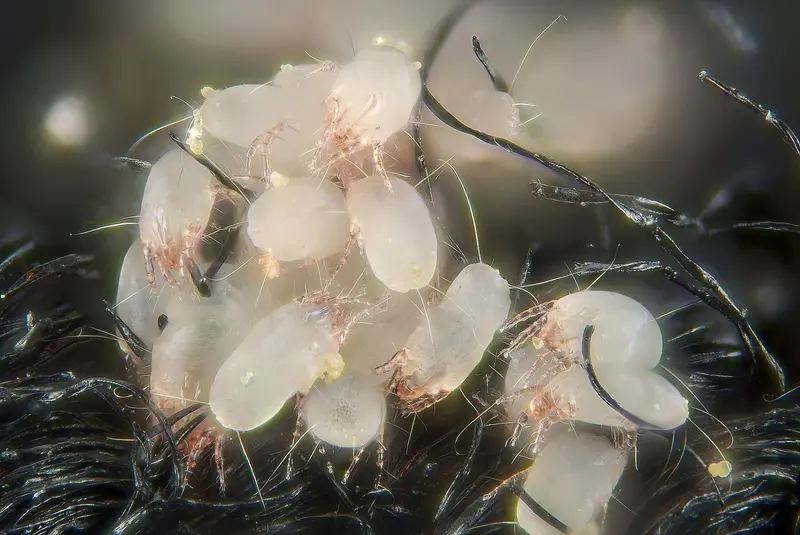
Waking up with a blocked nose, sneezing or itchy eyes that ease off during the day can point to house dust mites. With windows shut and heating on in winter, bedrooms are warm and often humid — conditions mites like.
This article summarises what Allergy UK and the NHS say about reducing mites in bedding. It's general information: if you have symptoms, a pharmacist or GP can help work out the cause and the right treatment.
What dust mites are
Allergy UK describes house dust mites as tiny creatures, about a quarter of a millimetre long, that feed on the skin flakes we shed and prefer warm, humid conditions. They live in bedding, carpets, soft furnishings and clothes. The allergy is mainly triggered by proteins in their droppings, not the mites themselves.
Symptoms Allergy UK lists include sneezing, a runny, blocked or itchy nose, coughing, red or watery eyes and tiredness. Mites can also make eczema and asthma worse. Because they're around all year, people often don't realise mites are the cause.
Allergy UK is frank that it is "not possible to completely remove" house dust mites from a home. The aim is to reduce them, and it says several measures together work better than one or two alone.
Washing: temperature matters
Both the NHS and Allergy UK give the same figure: wash bedding at 60°C or above. Allergy UK explains that washing at 60°C or higher kills mites, while lower temperatures only wash allergen away for a while.
Allergy UK suggests washing bedding that isn't inside an allergy cover every week. The NHS page on allergic rhinitis also suggests synthetic bedding and covers.
Before you put a duvet or pillow on a hot wash, check its care label — not everything can take 60°C, and some duvets are too big for a home machine.
How often to wash everything else
Dunelm's mattress care guide gives a general rhythm:
- sheets and pillowcases every one to two weeks
- duvets and pillows every couple of months
If someone in the house has a dust mite allergy, Allergy UK's weekly hot wash is the one to follow for the bedding they sleep in.
Covers for the mattress, duvet and pillows
Mattresses and pillows can't go in the washing machine, so covers do the work. Allergy UK recommends breathable covers that fully enclose the mattress, duvet and pillows, and suggests choosing products tested to stop allergen escaping.
Even without an allergy, a mattress protector is worth having. Bed Advice UK, the consumer arm of the National Bed Federation, recommends using one, and Dunelm notes it's easier and cheaper to replace than a mattress. If a mattress develops a fault, returning a mattress: faults and guarantees explains your rights.

Silentnight Duvets & mattress protectors
Anti-Allergy Duvet
Anti-allergy hollowfibre duvet
Sizes: Single · Double · King

We don't sell these products — details come from the makers' websites. Check the retailer for current prices.
Humidity and fresh air
Dust mites need humidity. Allergy UK suggests keeping indoor humidity between 30% and 50%, using a dehumidifier if needed, and using trickle vents, opening windows and running extractor fans in kitchens and bathrooms. That overlaps with the advice in our article on damp and condensation in the bedroom.
Airing the bed helps as well: pull the covers back in the morning and let the mattress breathe for a while before making the bed.
Cleaning the room
- Vacuum with a high-filtration vacuum. The NHS mentions a HEPA filter; Allergy UK suggests vacuuming upholstered furniture at least twice a week.
- Dust with a damp cloth, which picks dust up rather than spreading it, as the NHS suggests.
Children's soft toys
Soft toys in a child's bed collect mites too. Allergy UK suggests washing them at 60°C if possible, or, if not, putting them in a sealed bag in the freezer for at least 12 hours once a month and then washing them.
When to get help
The NHS suggests a pharmacist can advise on allergy medicines such as antihistamines and nasal sprays. It says to see a GP if your symptoms are getting worse, affect your sleep or daily life, you're not sure what's causing them, or pharmacy treatments haven't worked — or if your asthma is getting worse.
Is it the mattress?
An old mattress isn't automatically full of mites, but if yours is past its best for other reasons — sagging, lumps, waking up stiff — our guide to how long a mattress lasts sets out the National Bed Federation's checklist. Our guide to mattress types explains the main constructions if you are choosing a new one.