Sleep often gets harder as a pregnancy goes on: a growing bump, backache, trips to the loo, and simply not being able to get comfortable. There is also one piece of NHS advice about sleep position that every pregnant woman should know about.
This article summarises NHS guidance. It is general information — your midwife or GP is the person to ask about your own pregnancy.
Go to sleep on your side from 28 weeks
The NHS says research suggests that going to sleep on your back after 28 weeks of pregnancy can increase the risk of stillbirth. It explains that this may be to do with the flow of blood and oxygen to the baby. Its page on tiredness puts it as possibly doubling the risk.
The NHS advice is simple:
- The safest position to fall asleep in is on your side — either left or right.
If you wake up on your back
The NHS is reassuring on this: if you wake up on your back, you don't need to worry — just turn onto your side before you go back to sleep. What matters is the position you go to sleep in.
Pillows for comfort
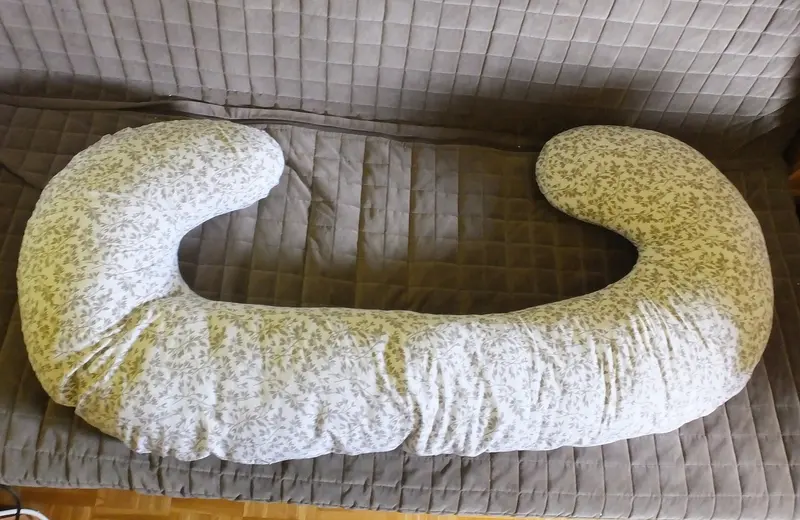
The NHS suggests supporting your bump with pillows and trying a pillow between your knees. Some people use a long body pillow or a C- or U-shaped pregnancy pillow, like the one in the photo, instead of several ordinary pillows; others manage with a pillow under the bump and one between the knees. Use whatever lets you settle comfortably on your side.
The pillow under your head matters too: our guide to mattress firmness by sleeping position includes The Sleep Charity's advice that a good pillow keeps your head in line with your shoulders and spine.

We don't sell these products — details come from the makers' websites. Check the retailer for current prices.
Tiredness
The NHS says tiredness is common in pregnancy, especially in the first 12 weeks, and that the only answer is to rest as much as possible — sit with your feet up during the day and accept offers of help.
Its other suggestions for sleeping better at night:
- avoid afternoon or evening naps if they stop you sleeping at night
- cut down on tea, coffee and cola in the evening
- gentle exercise, such as a lunchtime walk
- relaxation and breathing techniques, which your midwife can advise on, if worry is keeping you awake
With the Christmas holidays coming up, it's fine to say no to late nights. If you're staying with family, take your own pillows — a familiar setup makes side sleeping easier in a strange bed.
Feeling low
The NHS says that if poor sleep comes with other signs of depression — such as feeling hopeless or losing interest in things you used to enjoy — you should talk to your midwife or GP, because there is treatment that can help.
Your baby's movements
The same NHS page on reducing the risk of stillbirth explains that you should keep feeling your baby move up to and during labour, and that there is no set number of movements that's normal. If you notice your baby is moving less than usual, or the pattern of movements changes, the NHS says to contact your midwife or maternity unit straight away — don't wait until the next day.
The bed itself
If you're spending more time lying on your side than before, the mattress matters more. Our guide to how long a mattress lasts has the signs that a mattress is past its best, and explains when a topper can help and when it can't. A warm bedroom matters too in winter — see staying warm in bed this winter.
If you're preparing for a baby's arrival, our article on babies sleeping away from home at Christmas and the guide to cot mattress safety cover safe sleep for the baby.