In winter, bedrooms collect extra things that get hot: a plug-in heater, a phone charging on the duvet, a laptop on the bed, fairy lights, candles. Most of the time nothing happens. But a fire that starts while you're asleep is the most dangerous kind, because nobody notices it early.
This article pulls together GOV.UK's fire safety guidance and fire and rescue service advice into a simple routine. It is general information; your local fire and rescue service can advise on your own home.
Smoke alarms come first
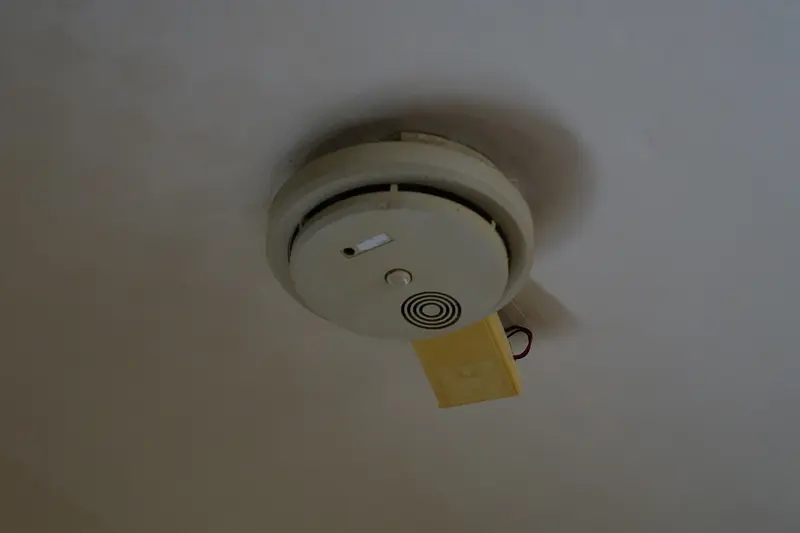
GOV.UK's fire safety guidance says to fit at least one smoke alarm on every level of your home and to test them at least monthly, by pressing the button until the alarm sounds. If it doesn't, replace the battery. Alarms work best on the ceiling, in the middle of a room, and on the hallway and landing — the route between bedrooms and the way out.
A good habit is to test them on the first of each month.
Portable heaters
A plug-in heater can make a cold bedroom bearable, but it needs space. Dorset & Wiltshire Fire and Rescue advises:
- keep heaters at least one metre (3ft) from curtains, furniture and clothes airers
- unplug them before you go to bed or leave the house
- plug them straight into a wall socket, not an extension lead
- don't let a heater block your way out
GOV.UK adds: secure a portable heater so it can't fall over, and never use it to dry clothes. Dorset & Wiltshire also says gas heaters should only be used in well-ventilated rooms — never in bedrooms.
In a small bedroom, the bed is often the nearest thing to the heater. Mattresses and bed bases sold new in the UK have to meet fire safety rules, explained in our guide to mattress fire safety labels, but no fire label makes it safe to push a heater up against the bed — keep the one-metre gap.
Phones, tablets and laptops
London Fire Brigade's advice on batteries and chargers is direct: never cover chargers or devices while charging — and that includes using your laptop power lead in bed. Charging devices need somewhere for heat to escape, which a duvet or pillow doesn't give.
It also advises:
- Unplug once charging is finished, rather than leaving things plugged in overnight.
- Use the charger that came with the device, or a branded, genuine replacement from a supplier you trust — it warns that counterfeit chargers can be deadly.
- Don't overload sockets.
- If a battery swells, stop charging it, switch the device off and contact the maker or a qualified repairer.
A bedside table or a hard surface away from the bed is the place for a phone overnight. Teenagers' bedrooms are worth a look too.
Candles and fairy lights
GOV.UK's guidance says to put candles out when you leave the room and make sure they're completely out at night, keep them in a proper holder away from curtains and other things that can burn, and never leave children alone with lit candles. It suggests LED or battery candles as an alternative — an easy swap in a bedroom.
For fairy lights and other plug-in decorations, the general GOV.UK bedtime advice applies: unplug electrical appliances at night unless they are designed to stay on.
Never smoke in bed
GOV.UK is unequivocal: never smoke in bed, and don't smoke when you're tired, have been drinking or are taking medicines that might make you drowsy.
Electric blankets
If you use an electric blanket, GOV.UK's advice is to unplug it before you get into bed unless it has a thermostat control for safe all-night use. London Fire Brigade says to replace one at least every 10 years. Our winter safety check has the full list.
A bedtime routine
GOV.UK's bedtime checklist, slightly shortened:
- close inside doors — this slows a fire's spread
- check the cooker is off
- unplug appliances that aren't meant to stay on
- don't run the washing machine, tumble dryer or dishwasher overnight
- turn heaters off and put up fireguards
- put candles and cigarettes out properly
- keep exits clear, and keep door and window keys where everyone can find them
Plan your way out
GOV.UK suggests planning an escape route, making sure everyone in the home knows it, and having a second route in case the first is blocked. Practise it, and update it if your layout changes — for example if a bed has been moved to make room for Christmas guests. If there's a fire, get out, stay out, and call 999.
For more on keeping a bedroom warm without extra heat sources, see staying warm in bed this winter.
- Mattress fire safety labels and the UK furniture fire rulesWhat the Furniture and Furnishings (Fire) (Safety) Regulations require for mattresses, bed bases and headboards, what BS 7177 means, and what changed on 30 October 2025.
- Children's beds, bunk beds and cot mattresses: a safety checklistWhat The Lullaby Trust, the National Bed Federation and bed makers say about cot mattresses, moving to a big bed, bunk beds, high sleepers and choosing a child's mattress.